Poem published by Eunoia Review
Huge thanks to Ian Chung for including two poems in Eunoia Review. This one is set in the area around Charing Cross Hospital in Hammersmith.
Poem published by Eunoia Review
Huge thanks to Ian Chung for including two poems in Eunoia Review. This one is set in the area around Charing Cross Hospital in Hammersmith.
If Shelley watched Scott McTominay
would his Naples dream have been of healing
even as the breeze from the Tyrrhenian
through holm oaks in the Villa Communale
reached an oriental plane?
Missing peace within and surpassing wealth,
is it that Percy would have lost himself
in the Quartieri Spagnoli under the Hand of God?
By Stadio San Paulo’s then untrampled floor
he may have found tenure in a purple noon
or peace as a visiting lecturer in seaweed
and star-showers, winding around Via Parco Grifeo
to dine at Veritas with despair itself
mild against stainless glory and stanzas of dejection
offset by I Azzuri.
n.b This is written in response to Shelley’s stanzas of dejection:
https://www.poetryfoundation.org/poems/45140/stanzas-written-in-dejection-near-naples
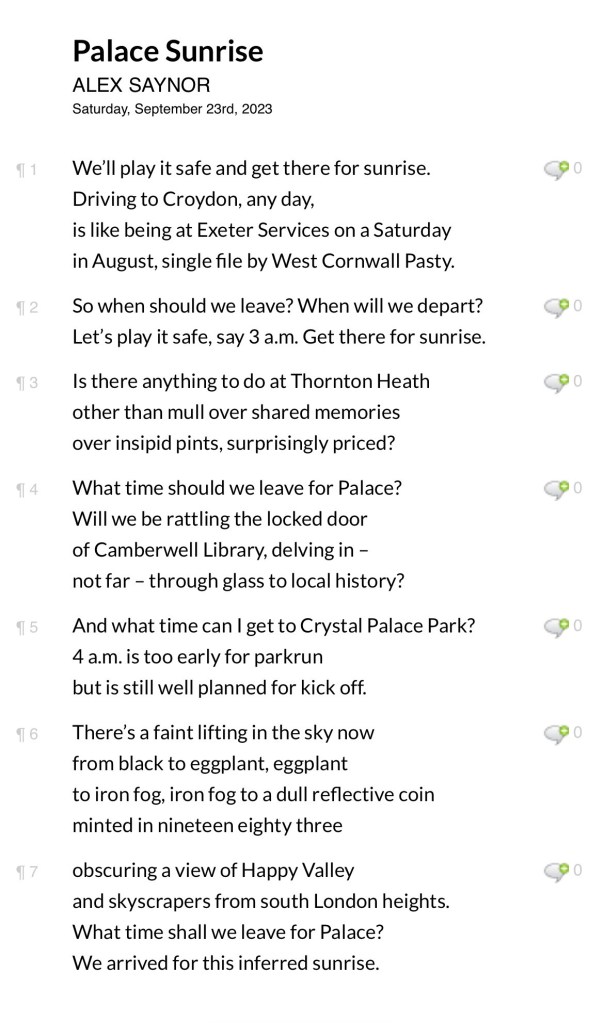
On Friday at South Street Poets Café I read a poem about driving to Croydon/Crystal Palace, the futility of doing so and what you can do if and when you get there.
This is intended as a subjective introduction to the music of Martyn Joseph. I would suggest the first port of call might be this video, especially where he introduces and plays ‘Driving Her Back to London’ to Rob Brydon (11 mins in). My words are superfluous; you can watch that and find your own way around from there, or if somehow it doesn’t strike a chord with you, then I imagine not much else below will either.
Having recently become a fan of Guided by Voices, only to discover that they’ve now released 44 studio albums, I’ve benefited from rankings and appraisals of their songs and albums (Bee Thousand and Alien Lanes are typically ranked 1 and 2 btw). I therefore thought I could do a similar thing here, having been a fan since fairly close to the beginning of Martyn Joseph’s career. He has released 25 studio albums, 15 live albums, 4 EPs, 3 compilations (including Thunder and Rainbows: The Best We Could Find 1988 – 2000) and five collaborative recordings; this list will focus on the studio albums.
Poet and lyricist Stewart Henderson will feature prominently; if a lyric is particularly wacky (as might be expected from someone who wrote a poetry collection called Who Left Granddad at the Chip Shop), or employs unusual rhyme (e.g. ‘So sad for him less fortunate whose life is just a crumpled leaf/ But we’re in first class to Belsen, ordering aperitifs – what’s yours?‘ or is particularly blunt, bordering on aggressive (shaft the poor, steal by stealth – at least Judas went and hung himself), it may well have been written by Stewart, and just when you think he’s Out-Hendersoned himself, he goes a step further. It’s worth noting that sometimes the co-writing genuinely involves the trading of verses (e.g. ‘Brothers in Exile’) — Martyn’s lyrics are great too.
After counting down from 10 to 1 in order of preference, I will also list what I deem to be Martyn Joseph’s enduring classics: the heavyweight, canonical songs that have survived the test of time and still appear on set lists today. You Tube links will be added when they show performances I keep going back to, but not for every reference — Songs for the Coming Home contains a thorough record of videos. Confusingly, the website Songs for the Coming Home is named after the album of the same title, which enters my list at Number 10 below.
10. Songs for the Coming Home (2012)
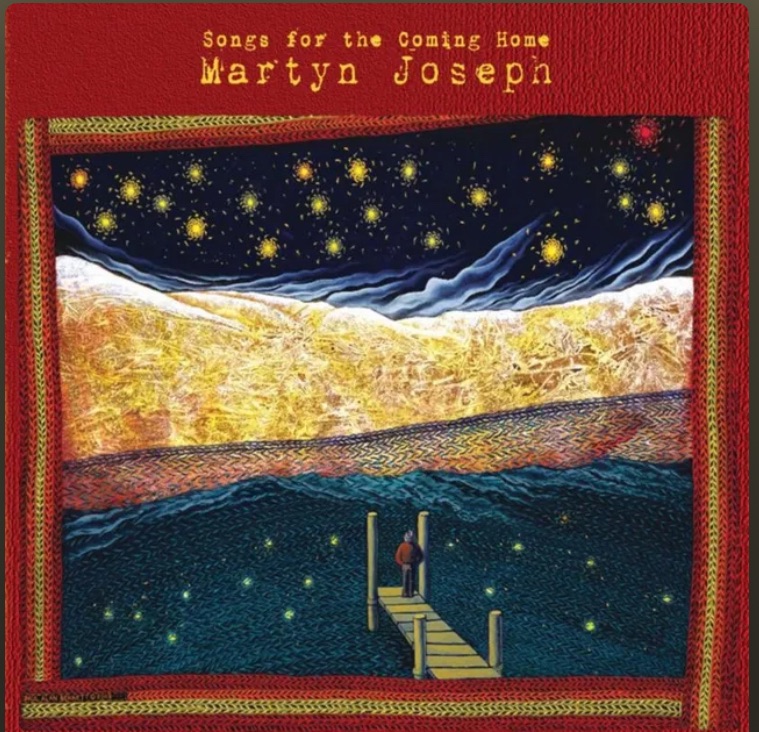
Martyn Joseph is not an artist who can be accused of ‘losing his edge’: quite the reverse, in fact. It has been sharpened throughout his career, especially since the opening verses of ‘Being There’ (1992) which opened the album of the same name and with its political engagement effectively announced his unique voice and purpose as an artist, including an implied departure from organised christianity: ‘These islands of divided spoils, we’ve sailed the world and robbed it too/ came home and wrote thigh-slapping books of jingoistic ballyhoo.’ Such a sentiment was absolutely too much for evangelical churches of the time who were far more concerned with trying to save souls from Hell than engaging with the realities of the world. It’s as if Martyn was saying ‘Wake up! There’s Hell and Heaven here and now: which one is it going to be?’ The 1995 classic Cardiff Bay begins with what I consider to be perhaps his quintessential line: ‘I took my son with his tear-stained face out of Sunday school.’ Martyn’s practice from 1992 onwards was of life outside the buildings and circumscribed thought patterns of fundamentalist church congregations. Twenty years after ‘Being There’, he released what could be considered his one and only ‘break-up’ album.
Songs for the Coming Home is in large parts dark in tone, opening with ‘Crossing the Line’ which considers the experience of someone beset by desperate thoughts: ‘What kind of blues are these/ What kind of blues are these? You can’t lose them in a thousand days, these blues/ They take you to that place/ to that dark sad place/ You think of crossing the line.’ The tone of the album is meditative and peaceful, but also darkly atmospheric, exemplified by the haunting album closer ‘Archive‘(MJ/SH) which ruminates on the end of a relationship: Too many phone calls now are sighs of silence/ so before this long attrition takes me down/ here’s a postcard from the flat wastes of the prairie/ and the apprehension of a different town.’
Another highlight is ‘Let Yourself’, a moving and uplifting song that has become a classic in Martyn Joseph’s repertoire. It’s also the name of the charity Martyn and his wife Justine set up to support small charities in Britain and around the world; Martyn’s audience has now donated over £1 million directly to small, grass roots projects selected by the charity.
Overall, this is a hard-hitting album of very well-crafted songs which seem to distil the difficult emotional landscape Martyn was apparently experiencing at the time. My memory of him live in this period is of an extra sense of burden and loss that seemed to emanate from the stage, though of course we have to be careful not to conflate the man with his lyrics in too straightforward a way; Martyn’s approach is always first and foremost to engage with the world outside himself.
Favourite song: ‘Archive’
Heavyweight Canonical Classic: ‘Let Yourself’
Favourite Lyric:
‘I was looking for some good advice
but I can’t afford the Wise Men’s asking price
so join me in the throwing of the dice
the hit and miss to being blessed.’
‘These are strange times to be an optimist
with Solomon derided and dismissed
I thought I heard some angels getting pissed
remembering days when they were blessed.’
From ‘Beyond Us‘ (MJ and SH) (I highly recommend this version from the back of his rental car)
9. Troubled Horses (2025)
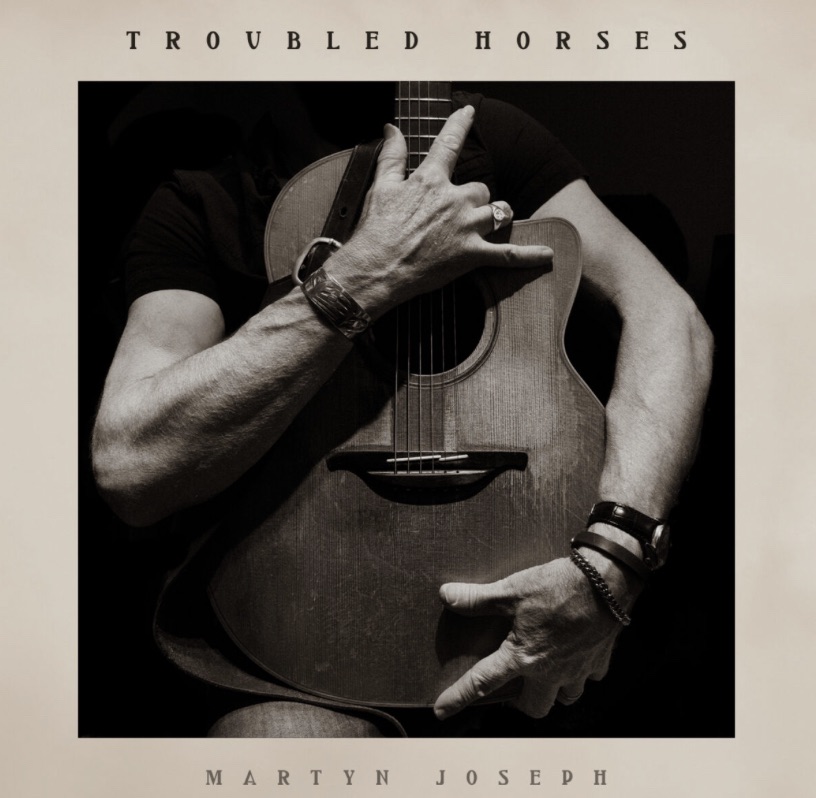
While it is always hard to appraise a recent album in relation to older ones, in my view the last 3 releases demonstrate a very rich vein of songwriting form, as evident on Troubled Horses, an album Martyn said is influenced by Jason Isbell’s Foxes in the Snow which inspired him to record songs in his home studio with only a guitar and harmonica, harking back to the intimate production values of Full Colour Black and White (1996). It might be worth mentioning at this point that a perennial project of Martyn’s is to try to capture in the studio the rawness of a live performance — it is hard to describe the power of these performances, and their emotional resonance: you have to experience it for yourself. The album Evolved reworks classic songs without many layers of studio production, The Shirley Sessions EP is similarly intimate and along with Full Colour Black and White, Troubled Horses is another recording in this style.
‘Last Night I Heard America‘ is an instant classic, and a must listen for anyone seeking to hear what Martyn Joseph does best. This is a love letter to America, reproachful towards its current administration yet also celebratory of the country’s landscape, culture, people and music, with references to inspirational artists scattered throughout: ‘You don’t board Paul Simon’s Pittsburgh Greyhound any more/ or take the Tom Waits Springsteen ride/ to the Jersey shore/ or walk with sweet Gram Parsons/ down the streets of Baltimore/ Last night I lost America/ A country of before.’
The tone of the album could be described as ‘weathered’: experienced yet hopeful, or ‘broken yet still held together’, as articulated on ‘Good Man’ (Far from Silent, 1997). A highlight for me in this regard is ‘Eternal Wandering‘, a song I listened to every morning for weeks on end during the winter; I highly recommend the live version above, backed by Den Miller. I think what I like about the song is that it’s not in any way a pep talk or motivational; it just tells you how things are: ‘Some days I doubt everything, my demons block the road/ I see them coming now they’ve figured out the code…’. ‘Getting Older‘ reflects on the theme implied by the title, and I particularly like the Caldera Sessions version linked to above because he mentions the corridor of the ‘Best Western’ hotel, though in the album version it is unnamed. I suppose he can adapt the hotel name to fit wherever he’s staying on tour…
Favourite Song: ‘Eternal Wandering’
Heavyweight Canonical Classic:
‘Last Night I Heard America’
Favourite Lyric:
Some are babies still arriving stateless on the shore
Fleeing from oppression, their darkness of before.
Yet our duty is unceasing to this displaced exodus
To welcome the outsider for in essence, they are ‘us’.
From ‘Troubled Horses’
8. This is What I Want to Say
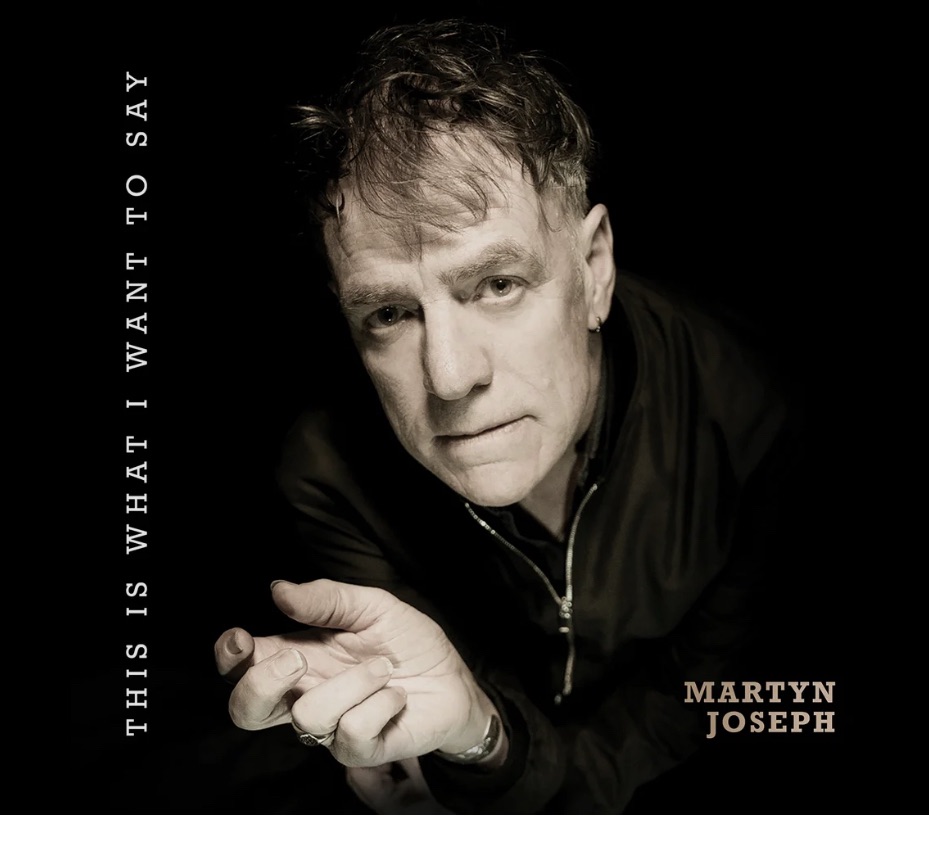
So many of Martyn Joseph’s album openers are announcements of realism rather than idealism, and I think that’s why I like them so much and they stay with me. This one is no exception: ‘I am folding like a kite that’s lost the wind/ I am holding to the remnants of these sins…’. I think that’s what might be termed a ‘hard relate’. The first four songs on this album shift quirkily between topics, with existential angst followed by an expression of love for big trees and trucks in the Pacific Northwest, a food bank in Sunderland and a gloriously scattergun expression of gratitude for ‘the abstract, the complex and the odd, the quarter-tone transcendence of the countless octaves God.’
The live version of ‘Albert’s Place‘, performed in front of its dedicatee to many tears, was broadcast on Radio 2 having been commissioned by the BBC. It was such a success that follow-up was commissioned which resulted in ‘Chapel Porth Beach‘, which tells the story of a pregnant lady who was almost caught out by the tides in Cornwall but was saved by a surfer, who still hasn’t been traced, and then by the RNLI. Both performances are likely to bring a tear to the eye.
My highlight of the album is Martyn’s adaptation of Patrick Jones’ poem ‘Waiting for the Rain‘ . Not since British Sea Power’s ‘Waving Flags’ have I heard a song which openly welcomes immigrants — obviously this is such a refreshing message in today’s climate: ‘From where the Severn, Rheidol and Wye birth their journey/ You too, you too now shall flow/ May the arms of the Cambrians strengthen you/ Yrwyddfa’s mist shawl you/ The valleys cwtch you till love is all that you know.’
Favourite Song: ‘Waiting for the Rain’
Heavyweight Canonical Classic: ‘Albert’s Place’
Favourite lyric:
May the Syrian soil beneath your fingers
Fuse with the Welsh earth to birth a new garden
May you take refuge in Tryfan’s crags
And wander wild up Pen y Fan
From ‘Waiting for the Rain’
7. Far from Silent (1999)
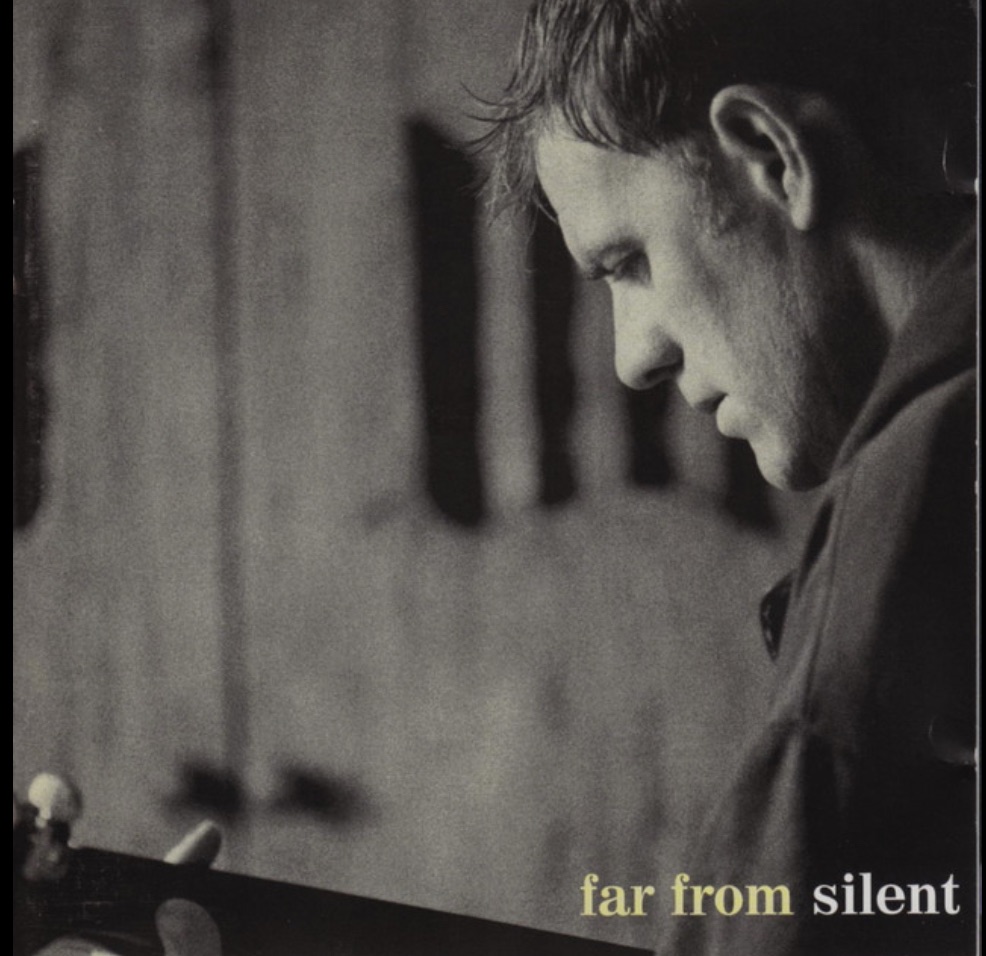
This is another album that finds Stewart Henderson in a pugilistic mode: ‘I’m a celebrity with injected lips that pout, and I’m spiritual – with a cookbook coming out.’ There’s a punchiness to several of the songs here, beginning with ‘All in the Past’ which summarises Celtic history with verses devoted to Scotland, Wales and Ireland and a chorus which resolves never to forget the imperialist injustices visited on those countries. ‘Another Chance‘ contains a line which has entered into Martyn Joseph folklore, later referenced (I think consciously) in Nick Parker’s excellent ‘Ode to Marburg‘ — I won’t spell it out, but would encourage you to enjoy and connect the two songs. A heavyweight classic of the album is ‘The Good in Me is Dead’, a stark reflection on the experience of refugees, with more bitingly realistic lyrics and no cheap image of hope: ‘If you put that lens in my face again, I swear I’ll break your head/ because the good in me is dead’. Here Martyn takes aim at the media again, as in ‘Celebrity.’
‘People Crazy as Me’ is an extensive encapsulation of Martyn’s attitude towards people and society, with a simple couple of lines which always seem to move me: ‘Always give the time of day to anyone. Don’t be ignorant and don’t you poke fun.’
The most deeply affecting song on the album is ‘Good Man’ in which Martyn manages to capture the horrible dilemma facing someone who is experiencing suicidal thoughts. This is beautifully expressed through the recurring image of a night visit to an angel by healing waters to explain the dilemma before finally ‘It was a good man who pushed down the locks and turned the engine on/ He prayed there for forgiveness and that it wouldn’t take too long.’
Yet more fighting ensues on humorous classic ‘Liberal Backslider’ which is an expert, merciless skewering of fundamentalist critics who seem to believe Martyn was compromising his place in heaven by caring about what happens in the world: ‘I take a stand on justice, I take a stand on race/ Gonna take me a TV evangelist and punch him in the face/ I sing about the hope that’s in me and ask why the poor aren’t fed/But if I don’t toe the party line/ it’d be better if I were dead.’
‘All this Time’, like ‘Archive’ from Songs for the Coming Home, is set in Canada and expertly captures the spacious, peaceful and mysterious atmosphere. This provides some contemplative counter-balance to Martyn and Stewart’s satisfyingly vicious lyricism which is only just reaching its stride on this album and reaches full fruition on the recordings that follow.
Favourite Song: Good Man
Heavyweight Canonical Classic: ‘The Good in Me is Dead’
Favourite Lyric:
‘Always give the time of day to anyone. Don’t be ignorant and don’t you poke fun’
from ‘People Crazy as Me’
6. Vegas (2007)
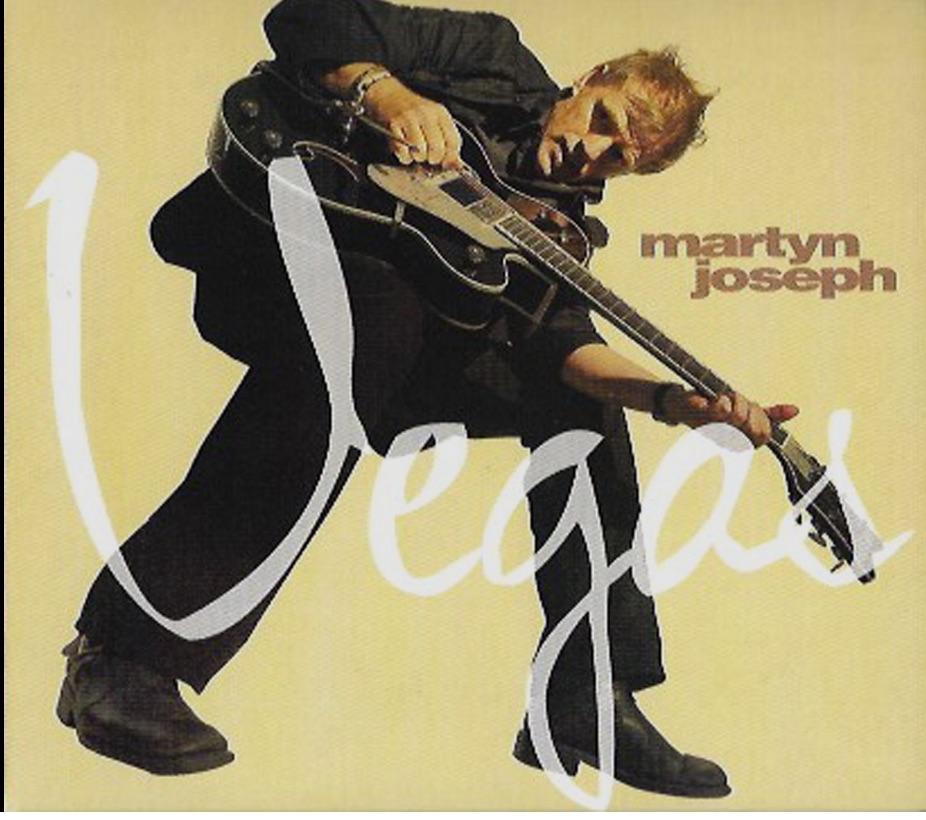
Title track ‘Vegas’ is the story of a cab driver who moved to Las Vegas from Nebraska and told Martyn Joseph his story. On tour the following year, Martyn found the same taxi driver, presented him with the CD and invited him to the concert that night, to which he turned up brandishing the record, proud and happy to have a song honouring his life.
This is another album of great range, with Stewart Henderson perhaps reaching a peak (or is it a false summit — see my entry for No. 5) of vituperativeness allied to dark humour on ‘Nobody Loves You Anymore’:
‘Only got your soul to sell/ As you load another shell/ Compared to you Macbeth did well/ Nobody loves you anymore.’
‘The Weight of the World’ (MJ/SH) is another lyrical epic, lamenting ‘pills to make us grateful and time shares for our souls’, while ‘Invisible Angel’ – I recommend this live version from Jericho Beach – I love for the superb guitar work and rawness of the lyrics. Other highlights include the rousing ‘I Have Come to Sing‘, played here in his home city of Cardiff, and the ruminatively eschatological ‘Things That We Have Carried Here’ which imagines the time when we finally leave our embodied states behind.
Favourite Song: Invisible Angel
Heavyweight Canonical Classic: Vegas, Kindness
5. Deep Blue (2005)
You will know by now that Martyn Joseph does not shy away from taking on difficult themes, and this album is no exception as it focuses on the Iraq war of 2003, the collapse of the mining industry, lost (or almost lost) faith in God and — with extreme power — a story of a lost child in ‘This Fragile World‘. Again, there is the total refusal to find a cheap fix or hopeful platitude: ‘Poignant verse so well remembered/ Smoke outside – let’s not offend/ From now on there will be corners/ Where we will stand and lose our minds.’ I highly recommend listening to the version linked to above, recorded during a soundcheck in 2025.
Yet again, there is another great album opener in ‘Some of Us’ that blends resignation with defiance and a vestige of hope: ‘It’s a journey, it’s a ramble/
It’s a gamble, it’s a phase/ A corridor, a segment/ A few hours and several days/
It’s a legacy of poverty/A mishap and a treat/A walk of benediction/ And a stumble in defeat.’ The guitar phrase after this chorus eloquently expresses the above sentiment; I’m not sure how, but that’s his genius.
On ‘How Did We End Up Here’, an Iraq war protest song, Stewart almost out-Hendersons himself with punchiness of lyric to parallel ‘I’d Take You Out’ from ‘This is What I Want to Say’ and ‘Nobody Loves you Anymore’ from ‘Vegas’:
‘Shaft the poor: steal by stealth. At least Judas went and hung himself.’ Hats off to you Stewart and Martyn and ‘have that’ anyone who (erroneously) has ever seen ‘Dolphins Make Me Cry’, his most famous song, as an indication of some sort of weakness or lack of guts and passion: that was never the case.
This album contains at least two more absolute classics in ‘Proud Valley Boy’ and ‘Turn Me Tender’, both of which create shivers live, and for different reasons. The lyrics of Proud Valley Boy, a tribute to American singer Paul Robeson and his support for Welsh miners, are so good that they deserve to be quoted in full, but I will settle for an extract — the passion in the live delivery is incredible:
‘And a dragon came here once/ And he didn’t let us fall/ He fed us as he sang/
As we limped back to Porthcawl/ And a dragon came here once/And his heart was all our pain/ Our advocate of hope/ And our defender in the rain.’
Turn Me Tender reflects on an uncertain faith in God, but one which has somehow survived all of the unflinching engagement with the world over the years outside the confines of organised religion: ‘It’s happened again, this colourless sky/ Has dimmed me again/ and I’ve run out of why/ Hank Williams is grieving/ I’m scanning the Psalms/ When Jesus was here they stilletoed his palms/ And the pledge and the vow is ‘you find if you seek’/ But what if you try and find nothing but bleak.’ The live version with an electric guitar line is so moving — another one that guarantees tears for me.
Favourite Song: ‘Proud Valley Boy’
Heavyweight Canonical Classic: ‘Turn Me Tender’, ‘Proud Valley Boy’
Favourite Lyric:
My name is Evan Merthyr born
My bloated knuckles dented worn
And when the pits were closed by force
They sent us on a typing course
It was one of those retraining schemes
A room full of discarded dreams
We sat and mourned our history
Whilst tapping out this elegy
From ‘Proud Valley Boy’
4. Under Lemonade Skies
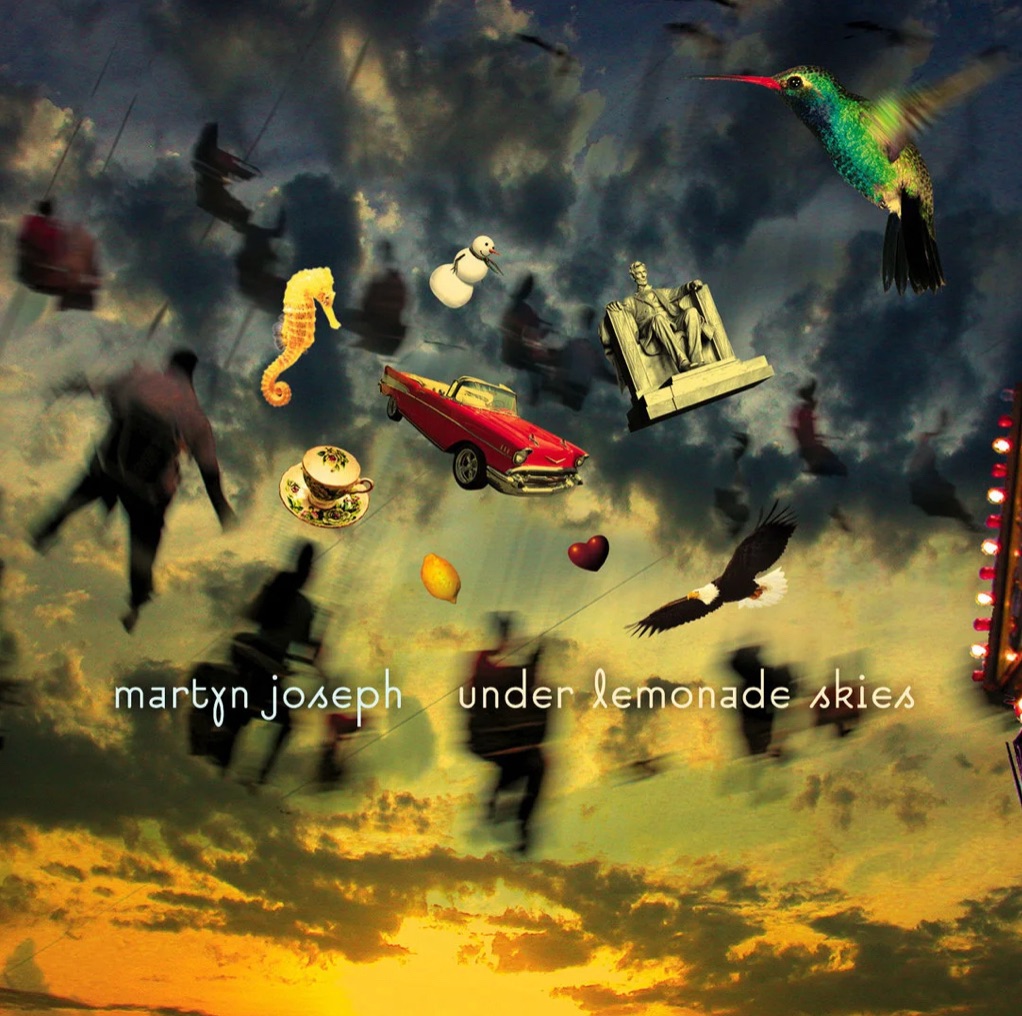
In ‘Lonely Like America‘ (MJ/SH), ‘On My Way‘ (performed here with Steve Knightley – ‘Now the misery can continue in the comfort of your own room…’) and ‘Brothers in Exile’ three late(r) career classics have been produced to rival anything in the repertoire, and that’s before mentioning ‘You’re the Moment (MJ/SH)’ which makes my list of top ten favourites (below) with lines such as ‘You’re my keen anticipation that the summer will supply the lavender aroma of an infinite July.’
‘Lonely Like America’ is masterful — the lyrics are outstanding, as any random choice will demonstrate, such as ‘Frontier boom-towns of displacement/ Scored a patriotic win/ Your money bearing Rushmore’s giants/ But your dollar’s paper-thin…’ and the guitar rhythm and phrasing to match the words are superbly complementary.
‘On My Way’ is a live highlight, for which Martyn is known to unplug the guitar and join the audience. The chorus is conducive to a heartfelt singalong, and again the words – Martyn’s this time – are excellent: ‘Man is a fool, his heart is a stone/ He drinks himself dry, drinks himself down to the bone/ No matter what they do to you/ you’re always free to choose/ and just ‘cos they beat you hard it don’t mean that you lose…’
The cover of Springsteen’s ‘One Step Up’ is another live highlight, especially the version linked to here which describes how Bruce is able to encapsulate the human condition in a few minutes of guitar and word craft. Finally, ‘Brothers in Exile‘(MJ/SH) is an absolute gem, revisiting the theme of nomadic faith: ‘Living out here means nostalgia burns strong/ For the forests of Eden where we used to belong/ But we couldn’t remain there, that was a land we outgrew/ But the wilderness she gives a far-reaching view.’
Favourite Song: Lonely Like America
Heavyweight Canonical Classic(s): Lonely Like America, On My Way, Brothers in Exile
Favourite Lyric:
Norma Desmond’s withered mansion
Travis Bickle’s raging streets
Martin Luther King’s last journey
From Memphis for the mercy seat
And now the curse of Steinbeck’s offspring
The poor foreclosed and left to bleed
A wounded bear, a tethered eagle
Are in a cage of make believe
From ‘Lonely Like America’
3. Martyn Joseph (1995)
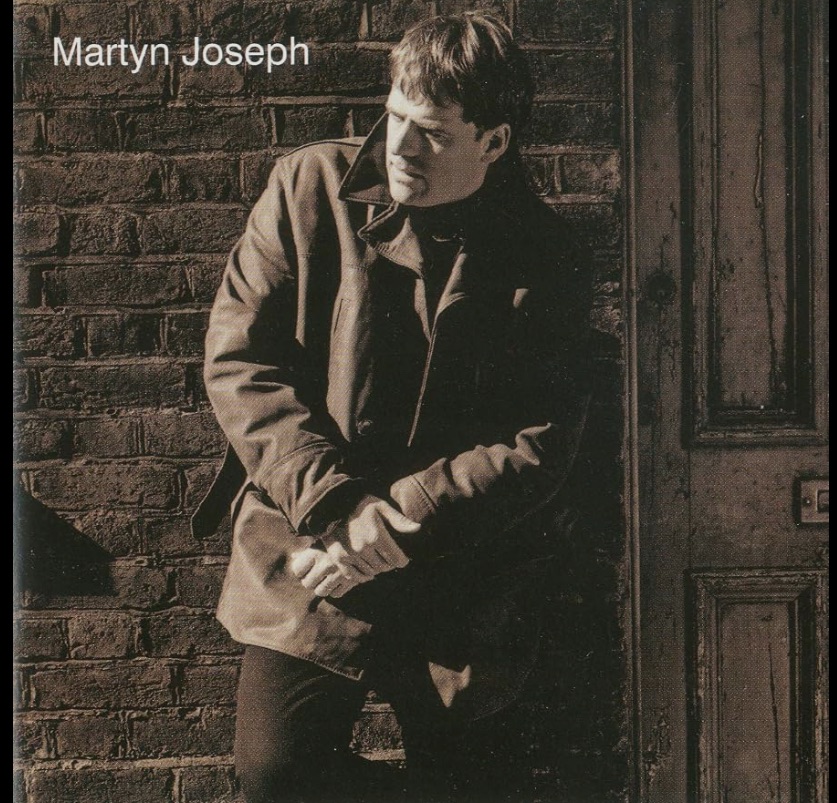
This is the first Martyn Joseph album that connected with me deeply — I used to listen to ‘Everything in Heaven Comes Apart’ (MJ/SH), with its Paul Muldoon-style crazy juxtapositions of images, and Cardiff Bay repeatedly as a teenager, for some reason making it a Friday night tradition to listen to both songs before I went to sleep. ‘Everything in Heaven…’ is another Stewart Henderson classic which reliably rewards random quotation: ‘Everything in heaven comes apart/ The atom and the tsetse fly/ Deceits which we now justify…’ while ‘Cardiff Bay’ is perhaps the song that’s closest to Martyn Joseph’s heart, focusing as it does on a walk through his home city of Cardiff with his eldest son. This to me is in a similar vein to The Kinks’ ‘Waterloo Sunset’, and as good: the company and city setting transcending the cares of the world for a few hours. This album was released by Sony Music or ‘when I was signed to Man Utd’, as Martyn puts it. The songs justify that label.
‘Change Your World’ is an assertively supportive song which still finds a place in live performances to moving effect: ‘Are you down to your last weary smile/ So put it on now, and wear it with dignity/ It’s time now to walk one more mile/ And very soon there are going to be changes…’. I love the imagery of ‘Between the Raindrops‘ and how it steadily builds to a shouted crescendo in the chorus where ‘the holy man searches his soul only to find NO-ONE.’ This song is rarely played live now, but remains a classic. ‘Talk About it in the Morning‘ is a powerful and direct consideration of the problems that develop in long term relationships, and used to be funny when played live as Martyn tried to assess who in the audience it was resonating with: ‘We’re props upon a stage/ And our lives are disengaged/ And we never seem to laugh/ And you never clean the bath…’.
‘Condition of My Heart’ is another powerful concert opener; I remember this being performed when Martyn supported Nick Parker‘s former band Why? in Shepton Mallet in 1997. He was wearing a Cardiff Devils cap and launched in with ‘I could start with the pimps and the bullies and those out of tune/ Move on to dictators and waiters on people’s misfortune…’ perhaps to a degree of bemusement among the audience, if I remember rightly, though I was hooked.
Album closer ‘Carried in Sunlight’ is a very moving reflection on the effects of Alzheimer’s in Martyn’s granddad Edward. I would perhaps see this now as a companion piece to the excellent ‘Felt So Much‘ (2021), which focuses on Martyn’s dad. While on a family theme, we may as well add to the picture with some more excellent songs: ‘Her Name is Rose’ (2015) is a very moving tribute to his mother Rose. I was in the audience in Cardiff a few years ago when his mum was in attendance and the song was played — I’m not sure if he felt under pressure but he had a mental block on the lyrics at one point and his wife had to shout them out from her phone. ‘It’s a Fine Thing’ (2024) from ‘This is What I Want to Say’ is a moving song written for his second son’s wedding, a follow up to ‘Love the Light in You’ (1998) from the Tangled Souls album, while ‘Driving Her Back to London’ (2018) and ‘Gift to Me’ (1995) (another great song on this here album being reviewed) are both in honour of his daughter. As has been mentioned, ‘Cardiff Bay’, an ultimate classic, is for his first son.
Favourite Song: Cardiff Bay
Heavyweight Canonical Classic(s): Cardiff Bay, Gift to Me, Change Your World, Between the Raindrops, Talk About it in the Morning, Carried in Sunlight
Favourite lyric:
And you’re long gone now
Although you’re still here
Your world is peaceful
And mine is full of fear
And it’s warm down in your valley
But out here it’s so cold
I guess we’re carried in sunlight
When the mind begins to fold
From ‘Carried in Sunlight’.
2. Being There (1992)
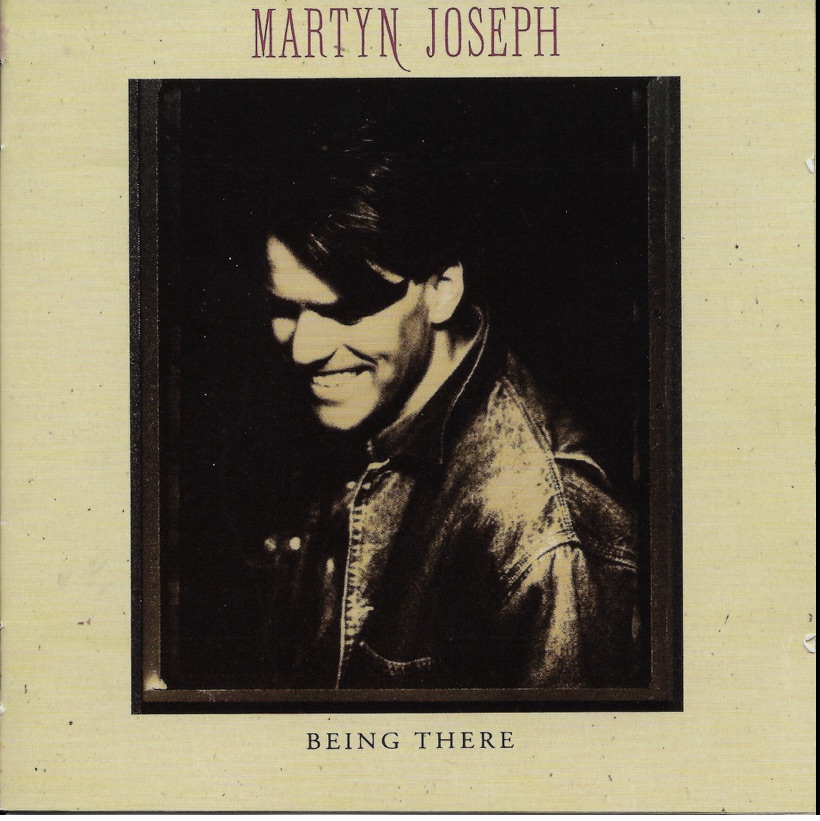
In my view this is the album on which Martyn Joseph first announced his true voice and identity as an artist, setting the tone for the rest of his career with a string of enduring classics that are politically engaged as well as personal, rooted firmly in the Welsh valleys but extending beyond them too. Previous album Treasure the Questions (1987) contained some great songs but was also somewhat hampered by an 80s production style that didn’t always find the right tempo or atmosphere for the song, making some of them faster and poppier than they would be when re-worked years later in various formats.
Title track ‘Being There’ has glorious density and quirkiness of lyrics, punctuated by an emphatic chorus: ‘Poll tax, blurred facts/ good job there’s not a soul tax/ Cos those who rule are those who couldn’t pay‘, a sentiment of abundant relevance to today.
While the production is not quite as pared down as it’s often refined to be in later years, there’s a reworking of Top 40 hit ‘Dolphins Make Me Cry’ here which is truer to its meaning than the original recording on Treasure the Questions. To dwell a bit on ‘Dolphins’, this is the song that Martyn was known best for throughout the 90s, charting as it did at number 34 at a time when the charts really meant something. This is some achievement, but there’s a sense in which the song became something of an albatross, seeming to create an unfair perception of a certain weakness or sentimentality. As a result, Martyn has retained a certain ambivalence about the song, though he does still play it at times. This version carries a sense of having reinterpreted the song over time, and is quite superb. The filming and vibe of the room is something to behold as well.
Had people focused on ‘Working Mother’ – ‘I change my clothes at Kings Cross
From bland to vivid bait/ I’m a working mother…’ – or Please Sir, which deals with the aftermath of Thatcher’s closure of the mind/mines, there’s no way he could have been characterised as meek and mild; the uncompromising toughness was there from an early stage.
One of my all time favourites is ‘Swansea'(MH/SH), sent to Martyn as a poem called ‘Dreaming of Streatham Tonight’ which imagined a soldier in the Falklands thinking of the simple pleasures and normality of home. Martyn mentions Streatham late in the song, but tweaked the title so evocatively to somewhere closer to home: ‘Well I’m thinking of wet streets/ And pubs that glow gold…’. The reference to Shredded Wheat is also a favourite; apparently it relates to an advert from the time. When I saw this performed at the Half Moon in Putney once, two guys in front of me exchanged a knowing nod and smile at this line: I wonder what their memories of the time are. Another classic is ‘Precious’ which manages to range around the world and then back to the national, local and finally personal — an incredibly well structured and affecting song.
This album is Martyn seizing a new direction, and writing a string of enduring classics in the process which set the foundation for all the incredible work to come.
Favourite Song: Swansea
Heavyweight Canonical Classic(s): Working Mother, Please Sir, I Will be Waiting, Dolphins Make Me Cry, Swansea, Precious
1.) Full Colour Black and White (1996)
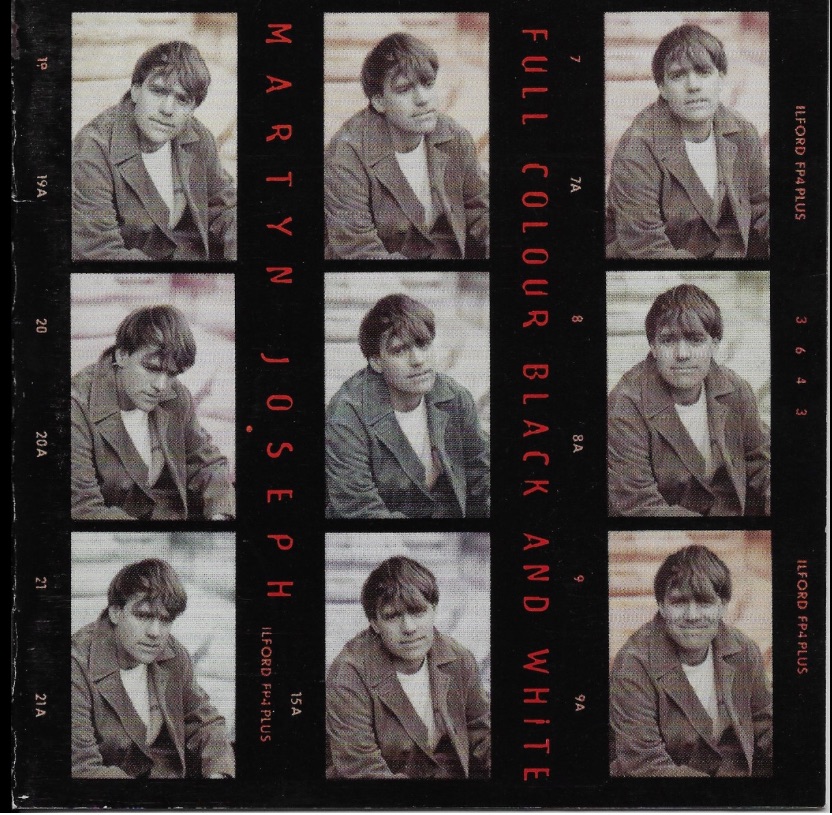
I feel that the top 3 albums are a kind of trilogy. Being There represents the finding of a unique voice and identity (as well as chart success), Martyn Joseph crystallises this with a series of brilliant songs and Full Colour Black and White set a future course by establishing the style and milieu in which Martyn writes, performs and records to this day.
The production is phenomenally intimate, to the point where at times you can hear rain pattering on the roof and gulls crying overhead. Driving acoustic opener ‘Going Home’ contains the brilliant conceit of having to busk at the Severn Bridge to afford the toll bridge home; it sets the agenda for the album, which really feels like a return home in more ways than one: to Wales, to Cardiff, to the recording studio in his house and to the articulation of his true voice presenting subjects close to his heart, from day to day pleasures to the depths of Welsh history and identity. In ‘Going Home’ there is a rare reference to golf, a rival career path at one point, and two references to money: not the greedy quest for more, but rather the ordinary ups and downs of being out of luck and then back in again, from being ‘10p short of the Promised Land‘ to being ‘one under par through seventeen…one more hole to go‘ before eventually pulling it together to ‘two putt and pick up the dough.‘ This also has a personal, local and family resonance, in that golf tournaments would regularly be played and won with his dad.
‘The Ballad of Richard Lewis (Dic Penderyn)’ delves deep into the history of ‘our Merthyr town’ (also the birthplace of the great Gordon Davies!) by recounting the unjust hanging of Dic Penderyn in 1831, based on Alexander Cordell’s The Fire People— on this subject I would also recommend Sally Roberts-Jones’ ‘Dic Penderyn: the Man and the Martyr’ (Yolk, 2022). It is a masterful song in its guitar work, lyricism and also singalong qualities: it is a stunning set opener to this day.
Perhaps the most discussed song in the Martyn Joseph canon is ‘Have an Angel Walk With Her.’ It is regularly cited by fans as a favourite song, and contains the enduringly gnomic and true line: ‘Free in my thinking but slave to my thoughts I am.’
While religious people may try to deliver us from ‘demons’, Martyn sings ‘Let the demons stay with me.’ He has wisely kept any context close to his chest, keeping the debate alive. I’ll probably be discussing it for the rest of my life — it’s a stock talking point between my sister and me, for example, a kind of standing agenda item.
There is a quiet, reflective and personal tone to this album, but lest you should think it therefore lacked wider impact, one of the songs was so impactful that Steve Chalke, the founder of Oasis Trust, wrote a book inspired by it. ‘He Never Said’ explores the many ways in which organised christianity misrepresents the teachings of Christ (if your name is Rod Parsley, look away). He never said, for example, ‘send your money to me/ Touch the screen and you’re gonna be healed (chilling laugh)’ or ‘be exclusive, like some golf club (live version).’
Most recent release ‘Troubled Horses’ is on a continuum which started with ‘Full Colour Black and White’, both of which are the closest that his studio albums come to live performances. While currently on hiatus, if you are able to experience one of these first hand in the autumn or winter, I would urge you to do so. I have written the above without mentioning the outstanding ‘Hang the World (Give me a River)’ — written near a lay-by in Cumbria — or my all time favourite: ‘Arizona Dreams’. I sincerely hope you will discover these and more.
Favourite Song: Arizona Dreams
Heavyweight Canonical Classic(s): The Ballad of Richard Lewis (Dic Penderyn), Have An Angel Walk With Her
Favourite Lyric:
So louder and longer than the sound of guns
Is the memory of what was done
You can only trample people down for so long
Time will show you have not won
From ‘The Ballad of Richard Lewis (Dic Penderyn)
Heavyweight Canonical Classics of the First Order, Of Which There Can Be Little Debate:
(not listed in order of preference)
Please Sir (Being There)
Cardiff Bay (Martyn Joseph)
Working Mother (Being There)
An Aching and a Longing (An Aching and a Longing, 1989)
Dolphins Make Me Cry (Being There)
I Will Follow (Treasure the Questions, 1987, An Aching and a Longing, 1989)
I Will Be Waiting (Being There)
Precious (Being There)
The Ballad of Richard Lewis (Dic Penderyn) (Full Colour Black and White)
Have an Angel Walk With Her (Full Colour Black and White)
My Top 10 Favourites
10. You’re the Moment (Under Lemonade Skies)
9. Driving Her Back to London (Here Come the Young)
8. Being There (Being There)
7. Everything in Heaven Comes Apart (Martyn Joseph)
6. Lonely Like America (Under Lemonade Skies)
5. Precious (Being There)
4. Proud Valley Boy (Deep Blue)
3. Cardiff Bay (Martyn Joseph)
2. Swansea (Being There)
1. Arizona Dreams (Full Colour Black and White)
Other Classic Songs and Big Hitters Which Could Join the Above List Either Now Or In Future: n.b. This list became a bit silly. It started at 20 and grew; it could grow further but I’ve decided to draw a line. Any additions/omissions, I’ll probably agree:
Driving Her Back to London
Lonely Like America
Whoever it was…
Wake Me Up
Hang the World
Treasure the Questions
Being There
Arizona Dreams
Change Your World
Swansea
On My Way
Last Night I Heard America
Brothers in Exile
I Searched for You
Nye
Albert’s Place
Chapel Porth Beach
Contradictions
Felt So Much
Born Too Late
Carried in Sunlight
Her Name is Rose
Let Yourself
Love’s Majority
Sing to My Soul
Gift to Me
Between the Raindrops
Vegas
I See You
Kindness
Accompanying playlist created by Emma Cantrell: https://open.spotify.com/playlist/4CpAlsEV82Gg8Xh4rloaeA?si=381xf_mpQb2NvXTMjjwB0w&utm_source=copy-link&pi=oGRtv7wgRQq85
old police station
hollyhocks lean through the railings
double rainbow –
a childminder wonders
when it will end
space hopping
Canadian professor
wrong to ask
cough remedy
in the river current
or just the box
cabins near Feltham
daffodils arraigned –
what’s the plan
summer fair
bouncy castle
by the cemetery
two month old
daily sudoku –
a woman stares
old Mortlake
war graves
endless rubble
writing ‘graves’
my pen wobbles
with the train
tower blocks
tell us thirteen minutes
to somewhere else
shunter’s yard
trains lined up
going nowhere fast
mind the gap
between the phone
and your nodding head
where are you going –
your spaniel will never know
West Croydon
financial instruments
given equal billing
to Wandsworth Common
air conditioned train –
he lost his social battery
Wimbledon’s plateau –
the drooping life
of delphiniums
Sutton station –
I’ll be there
in John’s grey jag
Mitcham Eastfields
cameras for your safety –
who wears a crown?
purple flowers
by a well –
one up
one down
Mitcham golf club
can you survive the cut
cabbage-white sands
As I leave, I lock the door against last year,
see a red kite unmobbed above the poplar.
It’s as if all we have are still lives’
shallow depressions in a web who knows who
draped across contours between moons,
unknown time and gravity ditches’
dark matter chronicles, anti-force
plugholes, tunnels, vacuums and voids
in which the Great Unknowing
here and now morphs into unbecoming.
The final outcome, destiny implosion,
all meaning folded or scrunched like paper
for recycling. Then repurposed souls
will drift through celestial apocalypse
outposts of the inhuman or stop, stuck like limpets
shuffling on a scrap of debris in the dark.
A thoroughfare, a place for passing through
but the brickwork underfoot is calming,
matching the walls: differing levels, curving walkways.
Hanging baskets always seem a ruse
to disguise the toxic with myriad flowers
corralled into neat gatherings
as if to say the luxury of time
extends to civilised blooming
while you step across broken pottery
and dried formations of weeds by a network of webs
a spider left. That downward curve again,
outstanding for skateboards, scooters
or an easy pause for the unfulfilled.
Across from the baskets, heraldry of towns’
true honour to join German and English
in civic partnership, albeit in this place to zoom through
or hold hands with a brave and tentative child
briefly eye-to-eye on a narrow wall.
When you wrote, you submerged metaphors
far too deep for readers to pick up
and even a fleet of interpretive submarines
foundered on the rhythm of surface waves.
Your depth-charge ruined prospects
of underwater hermeneutic archaeology:
whatever that is.
The big point, central purpose, eventual finding –
all was lost in the process of articulation.
There was a quest, a pilgrimage
like the one to Rabbi Marshak
who sat in silence in A Serious Man
after Rabbi Nachtner’s orthodontic parables
fell decidedly flat and Larry moved on.
Please note ‘Accessibility View’ (3 dots top right once the link is accessed) is the correct format for this little word/image collage thing:
https://sway.cloud.microsoft/q2VxTltad3mSkWuI?ref=Link&loc=play
Contents
Under the Radio (extract)
Winta’s Island
Away from Imber Court (extract)
Palace Sunrise (extract)
North Sea Island Pitches
St Patrick’s Stream (extract)
A Welcome in the Flatlands (extract)
Angels of Wallasey (extract)
For some reason, this poem has rumbled on since it first appeared in 2015. It recalls going to Brentford in 1989, on a very windy day, to see Fulham lose (though neither clubs are really mentioned). On top of one of the stands ‘Next Time Fly KLM’ was written in huge letters so as to be easily seen by people on the Heathrow flight path. The ball was usually up in the air too, as were we on the Chiswick flyover, along with the citizens of Brentford in the many tower blocks surrounding the ground. As was the case with the ball, not many people were ‘on the floor’ and if they were, they were buffeted around by gale force winds. As the response to this has been quite strong, it is now listed as being among the top 100 of over 18000 football poems archived by the British Library. If you read it by clicking the link below and are minded to register your own nod of mild approval by clicking the ‘heart’ icon, the poem may be buoyed up yet further in its unexpected ongoing passage over Chiswick — and that would be appreciated.
Crossflow Winds | Football Poets
The irony is that I wrote a poem about exactly this type of potentially shallow-minded and misguided futility.
See the leaf blowers by the Cornerstone:
leaves and dust, a brief step back
as if new combinations of air and sound
were a threat to the slow-paced man
in thin black jacket and white canvas cap.
See the sign language rumination
through ironies of dust blown from a cemetery
to a leaf blower in a cocoon of sound
conversing only through movement
every passer-by thinks they understand.

