Marc Woosnam’s Paper Crown begins on the rainswept streets of North London with a potent cocktail of place and atmosphere in Angel Islington, documenting a promising start to a relationship which soon turns sour as a dark and haunting undercurrent begins to prevail – this is a very well crafted cyclical vignette of how uncontrollable forces can corrupt even the best of intentions. This is powerfully followed by Therapy, one of the singles that had been pre-released ahead of the album, communicating with visceral emotional honesty the feeling of being misunderstood while fighting against the responsibility to pretend everything’s progressing (especially in the context of a real therapy session where time and money’s involved): ‘I’m not getting better/It’s flawed from the start/ I’m not getting better/ I’m falling apart. I’m out here exposed…‘ are some the most powerfully delivered lines on the album. As a listener, you’re faced with the stark reality that entire systems of belief and practice may be undermined by a slight fault in the initial premise, a theme that continues throughout the album. We believe every word of this, and that’s typical of all Marc Woosnam’s releases; there is never anything affected about the vocals, lyrics or instrumentation – nothing to dilute the sincerity of the words.
Endless is a song on an epic scale, visually arresting and with a filmic quality which parallels the opener, with ‘tears in the rain’ a subtly integrated Bladerunner reference connecting rain with a sense of being lost in time, compounding the atmosphere introduced by Angel Islington. The uptempo Confelicity follows, consolidating the focus on relationships, a theme presented beautifully by the duet Collide in which the central character, with Woosnam’s trademark authoritative vulnerability, admits ‘I thought I knew how to see, but I’ve been blind/ I thought a battle was a war but it’s just pride/ Now I understand it’s just where we collide.’ Anna Stewart’s voice subtly emerges through the initial backing vocals then takes the lead with great depth and potency – let this song seep in and I feel it has the power to affect thinking and conduct for the better.
Those well versed in the album will notice I haven’t mentioned Imposter, one of the songs sandwiched between the previous two mentioned. This, to me, is a lyrical masterclass in its honesty and irony. Again, the narrator’s confessional tone is punchy and real rather than weakly sentimental: ‘I’m just an imposter, a fake and a fraud, but I’m out here trying to keep my facade…‘. The subtle melody shift on ‘facade’ compounds our understanding as listeners that it’s those with the most sincerity and honesty who are most likely to feel at fault or even have a sense of imposter syndrome. We can all think of people who act with impunity and terrible self-importance, but who wouldn’t for one moment deem themselves to be ‘imposters’. That’s the irony of the song – we disagree while agreeing all along. Tying in subtly with this theme, we are then shown a genuine imposter in the song Prosperity, a critique of those who line their own pockets and promote their own reputation (and facade) in the name of religion or a noble cause while the unwitting sponsor ‘private jets and fancy cars’ and ‘make the preacher a TV star.‘ The placement of this song is perfect – the previous songs mean the plank (speck) has been well and truly removed before the speck (plank) is targeted in the eye of the preacher.
‘Bliss’ continues the dark and increasingly haunting tone with elongated vocal phrases, reminiscent of Nirvana, leading into the refrain ‘fire needs a fuel‘ which echoes over a rich cyclical chord pattern. Folly of Fools follows with another image of darkness, beginning on ‘Sunday morning at 3am.’ There is a duality to this, with the question ‘Who was I when I was where I shouldn’t have been’ creating an image of the character shapeshifting in the dark like Jekyll and Hyde, ‘a mirror showing just who is the profiteer.’ This also has a striking middle section where an echoey voice sings of ‘…the restless twilight, dwelling on my shadows deep and long.‘ The theme of duality is compounded by the final song ‘Push/Pull’ which, though it speaks of ‘the same old sad song, the same melody’, again contains the irony that hope, joy and even lightness exists in the very substance of unvarnished expression once pretence is stripped away.
On that note, the album perhaps finds its lyrical centre of meaning in Lords and Ladies (a song which initially reminded me of Crash Test Dummies’ Knights and Maidens, if only due to the upper class social milieu conveyed by the title), a culmination of the theme of honesty vs pretence built up throughout the album. The ‘paper crown’ of the title is evoked here as ‘crowns of paper, thrones of air…’. Deconstruction of pretence and privilege is astute and calmly observed rather than loaded with despair or excessive bitterness: ‘You think you’re OK – the deck’s stacked that way. You loaded the dice.’
While there are some dark thematic undercurrents to this album, these serve to convey psychological richness and an integrity of voice which ultimately finds hope and a sense of liberation in the exposure and rejection of many forms of social artifice. Paper Crown is an album of subtle lyricism and emotional depth which contains immediate pleasures and thoroughly rewards repeated listens.
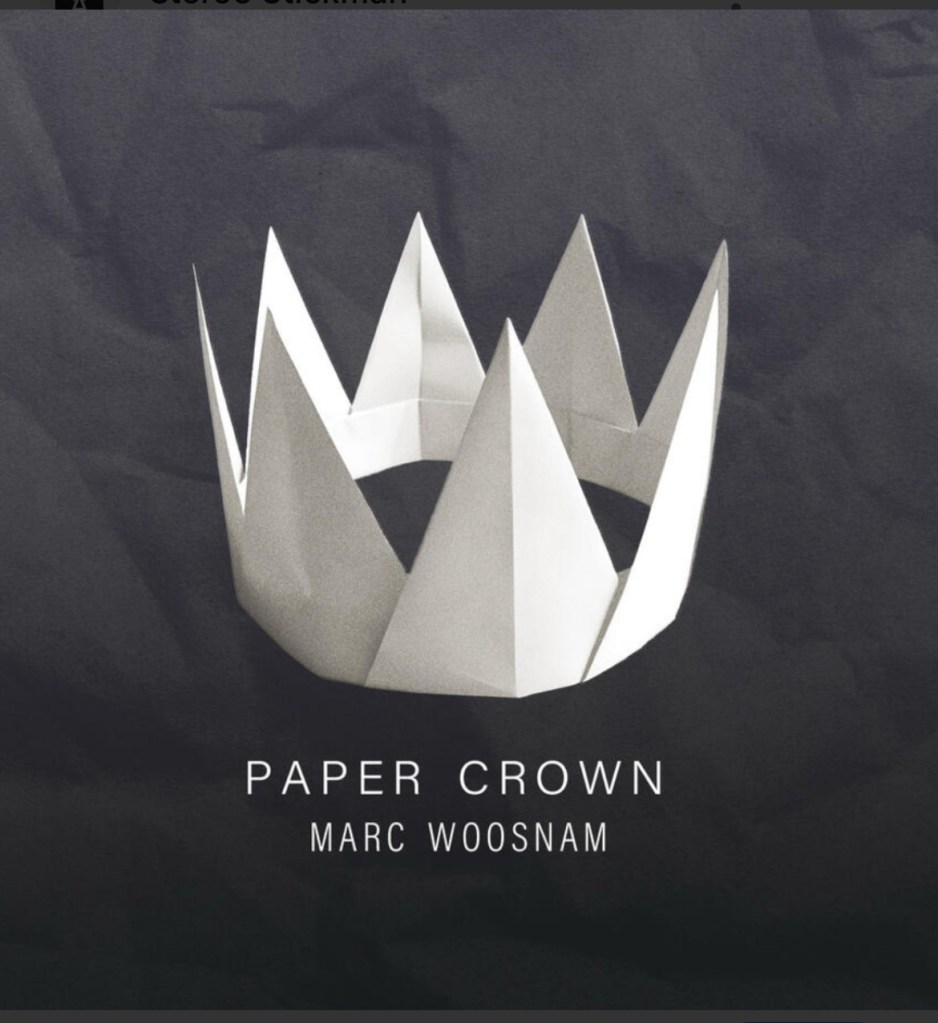
https://open.spotify.com/album/0YyvBEKe9hZghk0bX2AR7d?si=TZWHOtv9RJuHi6b2qvH_dg
 Wilderspool Causeway
Leave a comment