Skip to content

Wilderspool Causeway

  • Home
  • About
  • Contact
  • Poems

  • A Welcome in the Flatlands

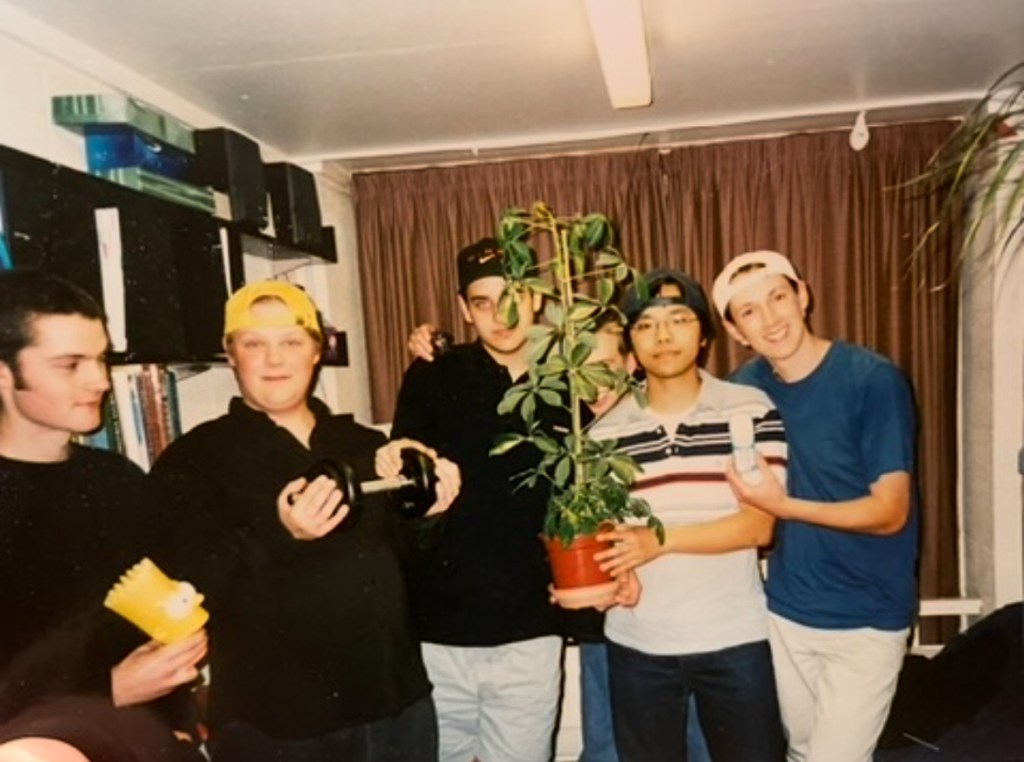
    i.m. Ken Mok

    I felt the warm earth of England
    on scraggly grass between paths on a council estate.
    You felt it too –

    but now it’s too late. Last April,
    in the undulations of Forest Rec
    how would we find you in Nottingham,
    a turn of the century grey brick ziggurat
    or in early morning winter sun behind the UEA lake
    you were the only one up to photograph?

    I felt the warm earth of England;
    you knew our welcome room to room
    on Waveney corridor, but not so much in pubs
    where you felt they saw ‘just another immigrant’.

    I felt the warm earth of England
    barefoot by the river, but now
    what is this fast-flowing current
    no-one signed up for,
    an ever-rolling stream become rapid
    to stop the heart on a football pitch.

    I felt the warm earth,
    but you were a man who bore burdens,
    sole breadwinner six thousand miles from home
    with bright and lively lads alone in loss.

    Who were the teams and why did the heart stop?
    A football pitch in Birmingham,
    too many questions…

    What happens to the dead in Wolverhampton,
    those diamonds –
    will there be a heavenly midlands

    in the upper reaches, not Asphodel Fields,
    where people of substance rest in glory
    or does the body simply shift its energy
    to multifarious particles’ resting places
    in the earth? In other words,
    we’re out of ideas at the end of the road
    and what’s left to say doesn’t bear mentioning
    or dissolves into cliché.

    I felt the warm earth:
    you heard it in the sounds
    of Neil Hannon’s Summerhouse,
    Passage over Piedmont, Eye of a Needle.
    Now no autumn tour to hear
    ‘Why did you have to die, Achilles?’
    and we wonder the same
    when the words of a text from New Cross Hospital –
    ‘he passed away’ – confirms an end
    in English euphemism
    but we’re told to be strong against the clichés,
    praise ‘muscular’, unsentimental
    stoic footsteps for no apparent reason,
    but what can we do
    but take the clichés and the footsteps on?

    I felt the warm earth of England
    in your membership of English Heritage
    and the hope of your 10 year-old’s questions:
    are conservatives really libertarian?

    Is a social democracy the ideal form of government?
    And what are your interests?
    ‘The two world wars and the history of colonialism.’

    I felt the warm earth of England
    and hope you felt it too in more than fragments.
    You make it warmer by your presence.

    August 22, 2025

  • Vauxhall Sand Martins

    From Slough Sewage Works
    to a football field in Uxbridge;
    Can you spot the Ring-billed Gull
    among the others? Portland Bill,
    in raptures: first a Desert Wheatear,
    then a Ring Ouzel. And where
    was the heath, that hot March
    with the Crossbills? Whatever
    is on the line, we follow the majesty
    to places thought unvisitable.
    Something’s blown in on tumbledown winds
    so pack the flapjacks

    and start the Passat. We’re off
    to Vauxhall Sand Martins,
    gravel pits and estuary flats,
    seabirds slotted between tower blocks –
    cormorants off the Isle of Dogs.
    Can you sense the sea by St Edmund’s,
    Millwall, reflected back
    in shallows of the outer dock?
    We’ll mark the species off,
    more than a hundred in twelve hours,
    from Slough Sewage Works
    to a football field in Uxbridge,
    from the post-dawn grey of Portland Bill
    to an equivalent dusk on Bugsby’s marshes.

    July 24, 2025

  • Keates Lane

    Something about consciousness returning to God
    in the mysteries of the elements of the earth
    we sink or scatter into. How can this be true?
    One shard of the ultimate is born and retires
    on an eternal pension to mists of perception
    while the living cling to your form as material.
    Escape karma and further incarnation
    when you no longer bind to anything.

    So how could past molecules be forced,
    and by whom, into non-elective lifetimes?
    Again the thought comes by Wren’s hotel
    and the river bridge, but I lose language
    to work out what it is beyond phantom pain
    or ‘ride no faster than your angel can follow’
    on the back of a motorbike leaving Keates Lane.


    July 19, 2025

  • Too Active

    n.b. This is part of a sequence called Tired Resort set at the coast towards the end of summer

    Too Active

    With everything strapped to your car:
    boats and bikes, a tired passenger,
    I wondered…with these holiday triathlons
    to every snatched restorative drink –
    are you not that bit too active?

    You’ve got a dog to slow you down and radiate peace
    but it sped you up a cliff on a short leash.
    You could never be stationary, ever
    fully here, and a coffee is for future plans
    getting smaller by the year.

    Photo by Harrison Haines via Pexels https://www.pexels.com/@harrisonhaines/

    April 15, 2025

  • Held Ground

    On inundated soil, the ground held its green
    in the lakes and depressions.
    A stroll from the manager – solitary barman
    in the tap rooms of melancholy,
    wondering who on a surface of imperfections
    was cutting ribbons, opening bluebell buildings
    in remote pockets of woodland,
    hoping and regretting wayside desolation
    lined the verges of memory
    (though the ground held for all its shifting) –
    ended in an ancient stone bench
    in the ruins of an abandoned castle
    with a view over the valley to the sea
    with peace only found in layers of time
    rather than hopes of future prospects:
    the only prospect is in the trees.

    April 5, 2025
    anti-enlightenment, melancholy, nature, Time

  • Opting Out

    Opting Out

    There’s a different kind of freedom
    when you opt out in faded Berghaus,
    not carrying much over the bridge
    as a train rattles over the viaduct
    between stubble fields, lighting its way
    like the end of your roll up.
    You descend into a quiet neighbourhood,
    perhaps heading to the allotments
    with a radio tuned to football results
    that are just a stream of numbers
    providing vague reassurance of life
    existing under storm clouds unleashing
    outcomes of low pressure weather systems
    from grey ghost husks over Forfar and Kinlochleven.

    January 5, 2025

  • Pan Haiku Review issue 3

    Click to access The+Pan+Haiku+Review+Summer+Issue+3+%28August+2024%29.pdf

    I am grateful that ‘The News from Schiphol Airport’ has been published in Alan Summers’ Pan Haiku Review, Issue 3 (p59). This is an open season issue, open to poems of up to ten lines in any form. However, none of the following words could be included: silence, silent, silently, still, stillness, reflection, reflected, old, young, alone, lonely, lone or any variations of those words. You can find out more about Alan Summers in this mini documentary which was featured on PHK (National Japanese Televison). This edition of the Pan Haiku Review includes submission guidelines for Babylon Sidedoor, the Autumn edition, as well as the review section Blōō Outpost, a wide range of poems of up to ten lines and editorial insights throughout on the nature of poetry & prose writing.

    The News from Schiphol Airport

    Now derisory
    is the dividend from labour
    as I see the red brick,
    read the news from Schiphol Airport,
    notice the leaves drift by the river
    and mud trodden in the tension of the week,
    the sky and stone wall,
    the dog in the water

    Alex Saynor

    August 28, 2024

  • Muddled Albion: a Response to Luke Turner’s ‘Legislated Nostalgia: Blur’s Modern Life is Rubbish, 25 Years On’

    Quietus article: https://thequietus.com/opinion-and-essays/anniversary/blur-modern-life-is-rubbish-review-britpop/

    Luke Turner’s thorough, and somewhat combative, reflection on the cultural significance of Blur’s Modern Life is Rubbish album, 25 years after its release, contains, imho, some good insights as well as, in my view, some unjustifiable and unsubstantiated angles of critique. Now over 30 years since its release, and following some superb concerts in 2023 which were very ‘Modern Life is Rubbish’ heavy, I decided to put some thoughts together in response to The Quietus’ 25th anniversary article.

    Luke Turner justifiably considers John Major’s ‘country of long shadows on county grounds’ to be a caricatured and limited vision of Englishness, but in my view he connects this somewhat unfairly to the so-called ‘Britpop’ era by suggesting that Blur’s Modern Life is Rubbish ‘set the tone for jingoism.’ To me there is nothing jingoistic about the album, and very few examples of patriotism, let alone jingoism, are easily found in the work of other artists of the time. My belief is that Modern Life is Rubbish is not part of a causal chain which led to increasingly worrying manifestations of nationalism over the years since its release.

    Modern Life is Rubbish starts off with a hymn to the metropolis as the Waterloo of Terry and Julie is transposed to Primrose Hill for Susan and Jim, with all of us apparently lost on the literal and metaphorical ‘Westway’ of modern life, and includes tales of commuting (Advert, Colin Zeal, Starshaped) and the weekly rhythms and pressures of life, including late night drinks, numbed Sunday rituals and strained expressions of angst in the wake of a nightmare tour of America. There is chaos and tension, notably in the concert intro of Intermission and outro of Commercial Break, as counterpoints to the crafted neatness and perfectionism of the production (which receives some justified criticism later in Turner’s article). But where is the jingoism?

    Following accusations of a jingoistic tone, or jingoistic-tone-setting-potential, Turner then understandably distances himself from the album on the basis of his current distance from the person he was when he first listened to it during his GCSEs. The formative nature of this time is crucial, I believe, to the present element of antipathy towards the album. The essence of the criticism is that by virtue of arising from a specific cultural moment, the album is locked in time and is therefore harder to extract from the subjective experiences and memories of the listener than other albums might be. Furthermore the ‘legislated nostalgia’ of false memory creates a romanticised and potentially small-minded, backwards-looking version of England which in its power and strangeness compounds the binding effect of the imagery to the present emotions and experiences of an incipient and impressionable younger self looking to the future. The nostalgia therefore has a doubly compelling (or revolting) effect. A present day listen catapulted the writer back to a transitional moment in his life, while the content was of ‘legislated’ false nostalgia which is intolerable due to the perceived narrowness of its Englishness, made narrower in retrospect by subsequent (albeit unrelated) expressions of nationalism.

    To change the subject, I had a similar experience with Amy Grant’s Heart in Motion album, which I listened to again recently with great ambivalence. This is because it was the one tape in the car stereo during a holiday in Cornwall in 1992 which culminated in a serious injury to my dad and a traumatic air-lifting to Truro hospital. There is a kind of retro-engineered melancholy to the music, even now. In truth, I remember the music feeling melancholic before the accident happened. Furthermore the faith dimension of the album is also met with real ambivalence now; at the time, Grant released music via two record labels, one Christian and one mainstream. ‘Hope Set High’, the ‘Christian’ release, feels complicatedly moving to me, while ‘Baby Baby’ feels light and throwaway. More depth on the album is provided by ‘How Can We See That Far’, (The same sun that melts the wax can harden clay…’). The Christian faith proclaimed by ‘If there’s anything good that happens in life, it’s from Jesus’ is not problematic to me in itself, but only because of the southern fundamentalist Christian milieu that would interpret that line in binary and exclusive terms.

    Furthermore, Turner uses Albarn’s cultural critique – that modern life is based on an accretion of rubbish from which it has become impossible to forge anything new – as a (compelling) template for his criticism of the album. On the other hand, Albarn was articulating an artistic statement which contained exaggeration and parody. Too literal a reading of this would indeed be ‘depressing’, but Albarn’s subsequent creative output shows that he is inventive and can change perspective; had this not been the case, I might agree more strongly with the criticism that the album is inward-looking, backwards-looking or trapped in time. For me, the subsequent work has a liberating effect on how the album is interpreted because of – rather than despite – the fact that it was of that early 90s moment, and nothing more. It doesn’t project forward into small-minded patriotic impulses or the rise of The Referendum or UKIP parties. It may have looked backwards, but in a parodic, mythologising celebration of the minutiae of English quirkiness of cultural detail and psychology rather than as a dark expressi0n of nationalism.

    A relevant antecedent is The Kinks‘ Village Green Preservation Society. This is also steeped in ‘legislated nostalgia’, a peculiarly English fantasy world of steam trains, cats, riverside idylls and old friends ‘playing cricket in the thunder and the rain.’ This is right at the heart of John Major’s caricature of Englishness, yet – partly because it’s a ‘legislated’ fantasy world – I don’t think it’s a depressing listen in 2024. I’m not suggesting that the two albums are of equal quality, but that neither are nationalistic – or jingoistic – and that there is little awkward, empty or irrelevant about them when listened to in the present day. Both albums were in part countercultural, initially misunderstood reactions to American culture, and both artists then swung back the other way dramatically, with The Kinks embracing stadium rock and Albarn elements of an American low-fi sound influenced by the grunge music Modern Life is Rubbish reacted against.

    Did Modern Life is Rubbish ‘set the template for Britpop’, as asserted by the article? If so, how valid is criticism of that fact? Blur can’t be blamed for the supposedly average music which followed in their wake, just as Nirvana can’t be blamed for the acts Albarn identified as Nirvana copycats in his narration of the 1995 documentary ‘Britpop Now’. On that note, while the quality of music may have been variable on that programme, I don’t recall any jingoism. I remember Gene’s haunting rendition of London Can You Wait, Echobelly’s King of the Kerb, which seemed to criticise a local gangster or pimp, and Elastica’s Connection. Some specificity of cultural reference, then, but not really any patriotism, let alone nationalism or jingoism.

    A baffling charge against the album, though – to me anyway – is that of ‘complacency’. Modern Life is Rubbish is original, finely wrought, musically complex and lyrically fresh, especially, for example, in classics such as For Tomorrow, Starshaped, Chemical World and Villa Rosie, three of which were reprised at the opening of Wolverhampton Halls in 2023, sounding as electric and fresh as ever. It is undeniable, though, that Damon calculated what would fit the cultural moment. His statement, quoted by Turner, that Blur was ‘more of a head thing…and have always been a concept’ is unavoidable, revealing his consciousness of not writing in the first person much and leaving the album open to Turner’s criticism that it lacks a certain soulfulness or personal voice to mediate between and infuse the character studies. Applying knowledge of Blur’s biography, however, it’s possible to see that they wrote from a personal perspective, albeit obliquely, on songs such as Blue Jeans, Sing (on 1991’s Leisure) and End of a Century (Parklife).

    While I understand the criticism that the album lacked an unambiguous personal voice, what I don’t believe it lacked was heart: it was a personal fightback from the band against the threat of being dropped by their record label, and was an artistically bold statement in the context of the music of the time. The album arose from personal dissatisfaction with both music and the wider culture: does it matter that they wanted to celebrate London in all its griminess, set against romantic notions of a bucolic escape tainted by knowledge of drugs and the corruption of innocence? Why should they have made a different statement? While admitting that ‘much of the songwriting is great’, Turner feels that the album still ‘grates’ – ‘infuriates’, even. He writes that the ‘wonderful songs’ are ‘curiously flat’ due to the production, which admittedly is characterised by many layers of Stephen Street’s perfectionism. An interesting aesthetic choice presented itself to the band, and I wonder how the album would have felt then and would feel now if Andy Partridge had produced it as originally intended: the demos he made were much freer interpretations of songs such as Coping and Sunday Sunday.

    Just as I don’t think the lyrics are all ‘backwards-looking’ (much of them were rooted firmly in the present), I also don’t think their vision is ‘rose-tinted’: drug references begin with For Tomorrow‘s ‘seamless line’ and continue in various guises throughout, most obviously in Chemical World but also more subtly in Sunday Sunday, Advert, Colin Zeal and Coping where the numbing effects of consumerism and bland routine are skilfully disparaged. This is reinforced by Starshaped, the quirky and lovable tour film referred to in Turner’s article. In a neat Fred Perry, Damon reports with sweeping gestures from the convenience store aisles of Heston services: ‘And here you have your culture: and here you have your sugars.’

    Modern Life is Rubbish also presents the theme of individuals straining under the pressures of modern life, in Coping, Pressure on Julian, For Tomorrow, Advert, Starshaped and Chemical World. Resigned, another first person narrative rather than a ‘character’ song, is arguably the most moving on the album, though other close contenders are Blue Jeans and, for me, the strange, almost surreal and (I agree with Turner here) ‘hard to inhabit’ character portraits of Starshaped and Villa Rosie. Turner’s connection between Blur and The Libertines in the phrase ‘muddled Albion’ is perfect. Of course England is muddled, as are notions of national identity: if they aren’t muddled, the danger is then of the certainty of dualistic ‘us and them’ patriotic thinking and, indeed, jingoism: which I do not believe Blur, or the other ‘Britpop’ bands which followed them, are guilty of.

    To counter the review’s conclusion that Modern Life is Rubbish was part of ‘the retromania of the 90s’ and as such was ‘part of the first stirrings of the little Englander mentality that has poisoned our cultural life since’, I do not see any causal relationship between an album such as Modern Life is Rubbish and the ‘little Englander mentality’ of UKIP, Nigel Farage and all the other unsavoury far right agents that have indeed ‘poisoned our cultural life’. Rather, Blur’s fraught and often anxious character sketches of those caught up in modern life – with subtly drawn autobiographical undercurrents – exist in a separate cultural stream that has antecedents in The Kinks, The Jam, XTC and others acknowledged by Turner as Blur’s obvious influences. One band’s articulation of a cultural moment in all its complexity, strangeness and time-bound or timeless relevance can be co-opted or abused by darker forces but cannot be held responsible for them.

    June 6, 2024
    blur, Quietus

  • Listening to The Unexplained

    i.m. Howard Hughes of The Unexplained podcast

    It’s not to muffle you
    that I have these earphones, but to listen
    to stories from an unknown world
    we may return to or come back from,

    a mist-wreathed island where definition blurs
    between one land and another
    soul in transit who ditched the ferryman

    and now returns to unnerve or comfort
    as you leave the house for a vape or cigarette.

    Perhaps this man is from the depths
    of history, saw the white light or tunnel
    to a generative source and thought
    All this calling and movement is not for me.

    I’ll wither one day like summer’s oak
    on time floes, but my cycle’s done.

    I stay here at peace, by the living haunted
    or arrive in dreams, by you co-opted.

    So with ears blocked, I listen to a story
    of one who changes but neglects to move on
    from thin places just beyond the veil
    where we sense a real soul
    or fabricated spirit charges

    in energy fields the living transform.

    May 30, 2024

  • The Heart of the Line

    In unplaceable country, running up and down the train
    to disparate smiles: you’re the heart of the line.
    Beneath your feet, the earth revolves
    while wheels trundle through distant halts
    before bursts of speed to the western sea.

    Now on such a small branch-line
    by a sunlit estuary and flare off the glass
    in the stillness of North Dock, then through the scrub
    and dense green of Ammanford, through the rec
    for Black Mountain views, some energy spike
    became a cyclical decline, inexorable shut-eye,
    a prostrate sleep before you alight

    somewhere you don’t know, a dark co-ordinate
    carried unearthed through renovated time
    by a church conversion and Towy Porsche
    on the back roads of a Llandeilo night.


    April 8, 2024

Previous Page Next Page

Website Powered by WordPress.com.

Loading Comments...

    • Subscribe Subscribed
      • Wilderspool Causeway
      • Already have a WordPress.com account? Log in now.
      • Wilderspool Causeway
      • Subscribe Subscribed
      • Sign up
      • Log in
      • Report this content
      • View site in Reader
      • Manage subscriptions
      • Collapse this bar